Free written scope consultation - allowances, timeline, and change-order rules on paper before a single trade is scheduled
Styles & brands we work with







See the difference
 Before
 After
After Before
 After
After Before
 After
AfterHow Much Does Home Addition Cost in Tampa?
A home addition in Tampa typically costs between $45,000 and $130,000 in 2026, with most mid-size projects landing around $75,000 to $95,000 for a ground-floor bump-out or a single second-story bedroom suite. That range assumes standard Florida construction: concrete slab or stem-wall foundation, wood-frame walls with hurricane strapping, a shingle roof tied into the existing structure, and finishes selected from a documented brand set such as James Hardie siding and Therma-Tru doors.
Square-foot pricing runs roughly $180 to $350 per square foot depending on whether the new space includes plumbing, the roofline complexity, and how much of the existing wall must be opened up for the tie-in. A simple 12-by-16 family room extension (192 square feet) without plumbing usually lands in the $45,000 to $65,000 range. A primary suite addition with a full bathroom and walk-in closet is a different job entirely, often $90,000 to $130,000. Those are the numbers we put in writing before the first tool comes out, and they are the same numbers that hold through the final walkthrough.
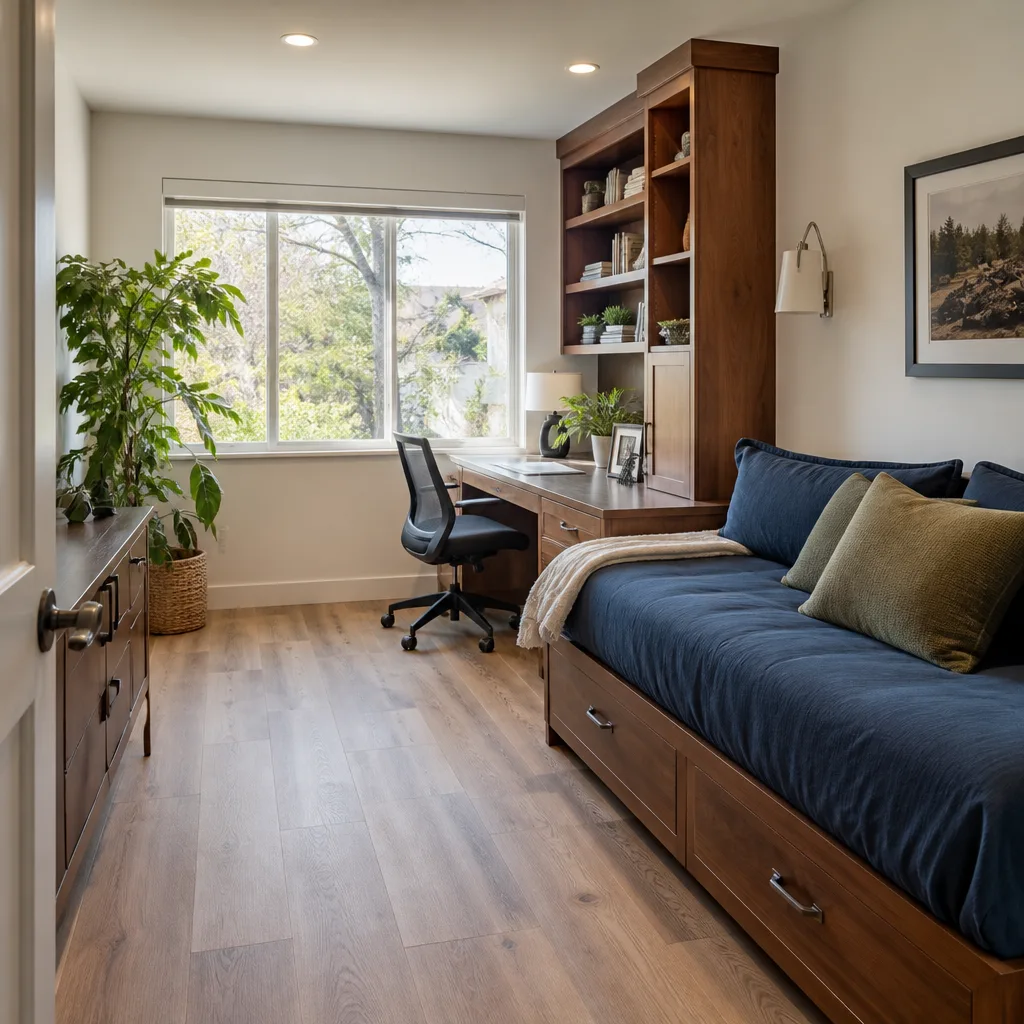
Home Addition Cost Breakdown (2026)
Here is how the money actually moves on a typical Tampa home addition. These line items reflect what Bradford Remodeling Co Tampa sees in current bids across Hillsborough County, from Carrollwood to Citrus Park to Westchase.
| Cost Component | Typical Range | Notes |
|---|---|---|
| Architectural plans & engineering | $3,000 – $9,000 | Stamped drawings and wind-load calculations required by Hillsborough County |
| Permits & impact fees | $2,500 – $7,000 | Tampa building permit, school impact fees, right-of-way review if applicable |
| Site prep & foundation | $8,000 – $18,000 | Slab on grade is less; stem-wall or pilings drive cost up in flood zones |
| Framing & roof tie-in | $12,000 – $28,000 | The hardest part of any addition: cutting into the existing roofline and flashing it properly |
| Exterior cladding & siding | $6,000 – $15,000 | James Hardie fiber cement runs higher than lap siding but resists Tampa humidity |
| Windows & exterior doors | $4,000 – $12,000 | Impact-rated or with shutter coverage as required by code |
| Electrical rough-in & finish | $4,000 – $9,000 | New subpanel may be needed if the existing panel is maxed out |
| Plumbing rough-in & finish | $3,500 – $10,000 | Only if the addition includes a bathroom, wet bar, or laundry |
| HVAC | $3,000 – $8,000 | Mini-split is the lower end; extending the existing ductwork costs more |
| Drywall, insulation & paint | $5,000 – $12,000 | Closed-cell foam insulation is the premium option for Florida’s climate |
| Flooring | $3,000 – $9,000 | Tile or luxury vinyl plank is common; hardwood is less practical in Tampa humidity |
| Trim, cabinetry & fixtures | $4,000 – $15,000 | Documented brands like KraftMaid and Kohler are specifiable and traceable |
What pushes a project from the low end to the high end of that $45,000 to $130,000 range? Three things mostly. First, plumbing: adding a bathroom means a new drain line, vent stack, and water supply run, plus floor demolition to reach the existing slab. Second, the roofline: a shed roof that ties into the existing eave is cheaper than a gable that requires rebuilding a section of the main roof. Third, flood zone requirements: if FEMA maps put your property in an AE zone, the finished floor elevation rules change the foundation design and can add $10,000 to $20,000, depending on how high the house must be raised.
At Bradford Remodeling Co Tampa, every one of these line items is written down before work begins. That is The Garrison Standard: a written price, no numbers that move at the door, and a signed scope of work that matches the signed invoice at the end of the job.
What Affects Home Addition Pricing in Tampa
- Flood zone and elevation requirements. Large sections of South Tampa, Palmetto Beach, and the neighborhoods along the Hillsborough River sit in FEMA flood zones. If your addition must be elevated or built on pilings or a stem wall instead of slab-on-grade, foundation costs rise sharply. A surveyor’s elevation certificate tells you which rules apply before the architect draws the first line.
- Wind-load and hurricane code compliance. Hillsborough County enforces high-velocity hurricane zone (HVHZ) requirements on roof tie-downs, window protection, and wall bracing. Older homes built before the 2002 code update often need substantial structural retrofitting where the new roofline meets the old one. That is not a corner any contractor should cut, and it is not a corner Bradford will cut.
- Second-story additions versus ground-level bump-outs. Adding up costs 25 to 40 percent more than adding out. A second floor means the existing first-floor walls must be evaluated for load capacity, the old roof comes off, and all interior finishes below get exposed to weather during the build. Ground-level additions are simpler but eat into yard space, which matters in tight-lot neighborhoods like Seminole Heights or Hyde Park.
- Plumbing and drainage if adding a bathroom. Cutting into a Tampa slab foundation to run a new drain line is exacting work. The existing sewer lateral may also need to be inspected and upsized. If the main line runs through the footprint of your addition, relocation costs add up fast.
- Age and condition of the existing structure. A 1950s ranch in North Tampa often has ungrounded wiring, undersized framing, and cast-iron drain pipes. Swapping those out while the walls are open is the right time to do it, but it adds cost. Homes built after 2002 are generally easier to add to.
- Material choices and finish level. A Cambria or Caesarstone countertop versus a basic laminate, Kohler fixtures versus builder-grade off-brands, kraft-faced batt insulation versus closed-cell foam. Each choice moves the number. Bradford works with a documented roster of name-brand materials so the specification you approve is the material that gets installed.
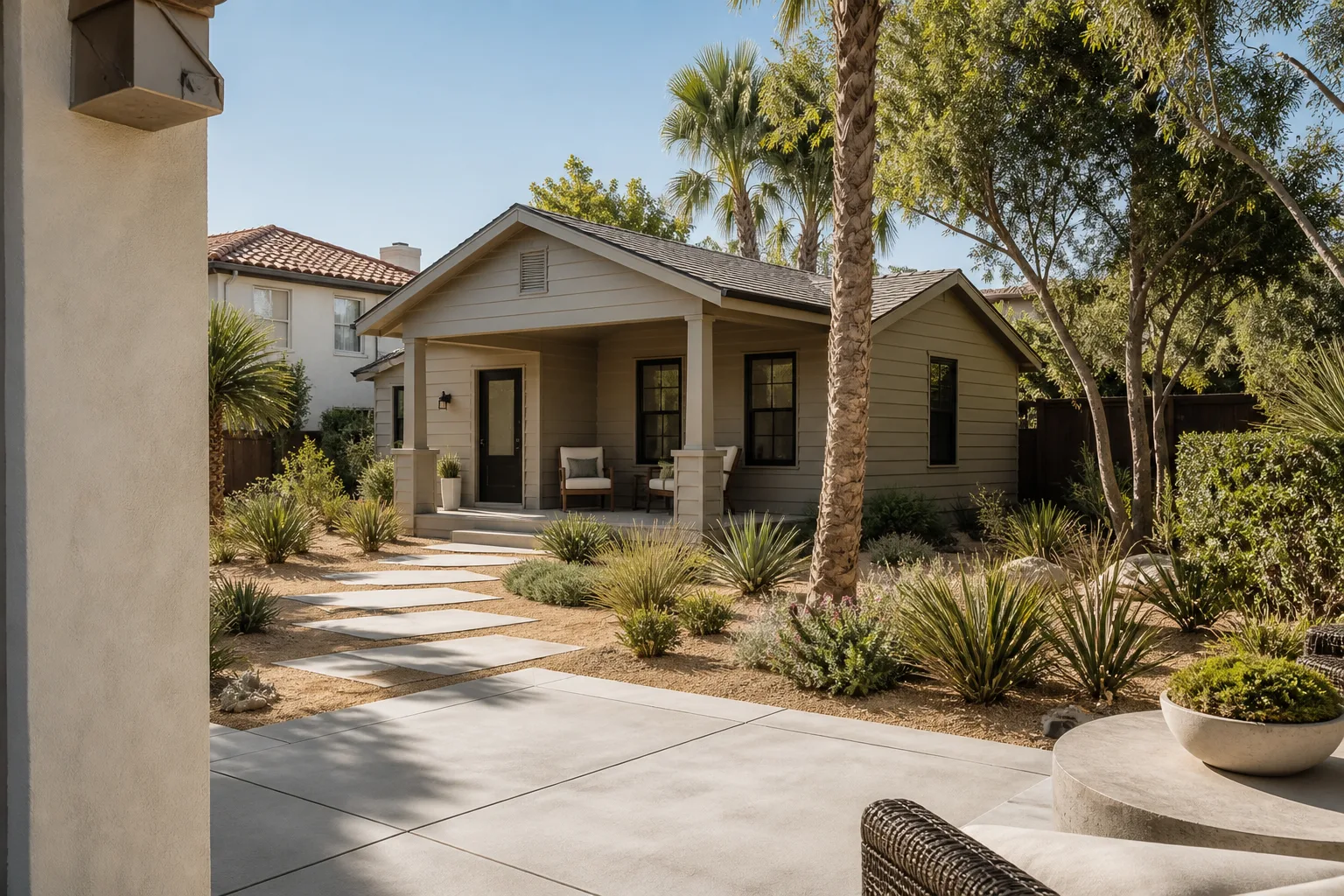
Home Addition Cost by Project Type in Tampa
Room Addition
A single room addition, a 12-by-16 bedroom or home office, typically falls between $45,000 and $70,000 without plumbing. With a tie-in roofline, impact windows, and a new HVAC mini-split, the math lands around $285 to $330 per square foot on the smaller footprint. The cost per square foot is higher on small additions because the fixed costs, permits, plans, roof cutting, demolition, spread across fewer square feet.
Primary Suite Addition
Adding a primary bedroom with a bathroom and walk-in closet runs $90,000 to $130,000. This is the most requested home addition in Tampa, particularly in mid-century neighborhoods like Forest Hills and Virginia Park where the original homes have two or three bedrooms and one shared bath. Plumbing, waterproofing, shower glass, and tile set the pace here. The numbers are consistent: a 400-square-foot suite at $240 to $320 per square foot puts you in that range.
Bump-Out Addition
A bump-out expands a single room, often a kitchen or living room, by 4 to 8 feet along one wall. Costs run $20,000 to $45,000 depending on length and whether the bump-out crosses a load-bearing wall. This is the most economical way to gain floor space without adding a full foundation perimeter, though it does not add the same square footage value at resale as a true addition.
Second-Story Addition
Building up costs $100,000 to $160,000 for a partial second story with one or two bedrooms and a bathroom. The higher range accounts for reinforcing first-floor framing, temporary weatherproofing during construction, and the full roof removal and re-installation. In flood-prone areas of Tampa where ground-level additions are restricted, this is often the only viable path to more square footage.
Garage Conversion (Conditioned Space)
A garage conversion to a living area runs $30,000 to $80,000. The swing is wide because some garages already have electrical service and flat slabs ready for floor covering, while others need the slab raised, new windows cut into masonry walls, and the overhead door replaced with a Therma-Tru entry system to meet egress and insulation code.
ADU Construction
Detached accessory dwelling units in Tampa run $90,000 to $220,000 depending on whether you build a studio shell or a full one-bedroom with its own utility connections. Tampa’s zoning code allows ADUs in many single-family zones, but setbacks, lot coverage limits, and a separate electrical service line all steer the budget. An ADU is effectively a small standalone house, with everything that implies, a small foundation, four exterior walls, its own roof, its own HVAC, and its own rough-ins.
For a deeper look at what goes into a ground-level addition here in Hillsborough County, see our Home Addition in Tampa page. It covers the build process from the first survey to the final walkthrough.
Permits and Code Requirements in Tampa
Every home addition in Tampa requires a building permit from the City of Tampa Construction Services Division. That is true for additions of any size: there is no “small enough to skip permits” threshold for structural work. The permit application requires stamped architectural drawings and, for second-story additions or complex tie-ins, a structural engineer’s wind-load certification.
Plan review in Tampa generally takes 2 to 6 weeks depending on current backlog and whether your property sits in a historic district. Hyde Park and Ybor City have additional design review layers that can extend the timeline. Budget for it: while plans sit in review, your contractor cannot legally begin demolition or foundation work.
Beyond the permit itself, Hillsborough County collects impact fees on new habitable square footage, and school impact fees apply to homes adding bedrooms. Those fees are predictable, usually $1,500 to $5,000 on a typical addition, and Bradford itemizes them on the written price sheet instead of discovering them mid-project like a surprise invoice.
How Long Does a Home Addition Take in Tampa?
A ground-level room addition without plumbing takes 3 to 4 months from the first hammer swing to final inspection. A primary suite addition runs 4 to 6 months. A second-story addition can take 6 to 9 months, in part because the house is exposed to rain during the roof transition phase and work stops during heavy weather events.
Schedule padding in Florida is not optional. Hurricane season runs June through November, and a tropical storm watch shuts down crane work and high-wall framing for safety. A disciplined contractor builds the schedule around that reality. The Garrison Code, the project schedule standard Bradford follows, writes milestone dates into the contract and requires the project lead to communicate any weather-driven shift to the homeowner within 24 hours.
Home Addition vs. Moving: A Straight Financial Comparison
In 2026, the median home price in Tampa sits around $450,000. Selling a paid-off home to buy one with more square footage means paying roughly 8 to 10 percent in transaction costs: realtor commissions, closing costs, title insurance, and moving expenses. On a $500,000 sale and a $650,000 purchase, that is $50,000 to $70,000 in friction costs, none of which improves the house you end up in.
A $75,000 ground-floor addition that adds a family room and a guest bedroom does improve the house you are already in, and at the $220 to $280 per square foot range, it costs less than the spread between your current home and the next step up the property ladder. The math is straightforward: run the numbers both ways with a written quote in hand. Bradford gives you that quote before you decide anything.
How to Save on Home Addition
Building a home addition in Tampa is not the place to hunt for the cheapest bid. It is the place to buy a written scope and a signed guarantee. That said, there are legitimate ways to control the number without cutting quality:
- Plan the addition as a simple rectangle. Every corner adds cost. Hip roofs, bump-outs on the bump-out, angled walls: each one adds framing labor, roof complexity, and waste. A rectangular footprint with a shed-roof tie-in is the most economical shape that still looks right.
- Choose a ground-level addition over building up. Going out avoids structural reinforcement of the existing first floor and keeps the main house livable during construction.
- Keep plumbing out unless you truly need it. A home office or family room without a bathroom costs dramatically less than one with a full wet bar or half bath. If you do add plumbing, locate it adjacent to existing lines so the drain run stays short.
- Time the permit filing to avoid the spring rush. Tampa’s plan review queue gets long after the first of the year. Filing in fall can shave weeks off the front-end timeline, and shorter timelines mean less escalation on material costs.
- Stick to documented, mid-range material brands. KraftMaid cabinetry, Kohler fixtures, and James Hardie siding offer manufacturer warranties and predictable pricing. Going full custom on every surface is where budgets quietly double.
- Get the written price up front, not just an estimate. An estimator who gives a verbal ballpark and then “discovers” costs later is not giving you a price at all. Bradford Remodeling Co Tampa writes every line item down before work starts, and that written price is the contract number. Call (941) 655-9297 and ask for a written quote: you will have it in hand before you sign anything.
How Bradford Remodeling Co Tampa Prices a Home Addition
Led by Curtis Lane, Bradford Remodeling Co Tampa has held to The Garrison Standard since joining the Garrison Partners family in 2004. The Standard is straightforward: every project gets a written price before any work begins, every crew member who walks onto your property is background-checked and uniformed, and every completed addition carries the 365-Day Done Right Promise in writing.
The 365-Day Done Right Promise means exactly what it says. If any part of the finished addition fails due to workmanship within one year of completion, Bradford returns and corrects it at no charge. No deductible, no fine print, no “that was not in the original scope” conversation. The written guarantee is signed and handed over at the final walkthrough, along with a documented scope sheet that lists every line item delivered.
Materials follow the same discipline. Bradford installs documented name-brand products: James Hardie fiber cement and GAF roofing on the exterior, Therma-Tru doors, KraftMaid and Wellborn cabinetry inside, Cambria and Caesarstone surfaces on counters, Kohler and Moen fixtures at every plumbing point. Manufacturer specifications and warranties back every material selection, so when the written price says you are getting X, the crew is not substituting Y.
Curtis Lane runs the Tampa operation with a simple principle: the homeowner should never wonder who is showing up, what the final number will be, or whether the work will hold. A live person answers the phone 24 hours a day, 7 days a week, because questions do not keep business hours. When you call at 9 PM with a question about your framing inspection, a real person picks up.
If you have been burned by a remodeling contractor before, you know exactly the difference this makes. The no-show crew. The “unexpected” invoice after the walls are open. The punch list that never gets a final punch. The Garrison Standard exists because Curtis Lane has seen those failures and refuses to repeat them on his job sites.
Start on our home page for the full picture of how Bradford operates and what the 365-Day Done Right Promise covers.
FAQs – Home Addition Cost
How much does a 400-square-foot home addition cost in Tampa?
A 400-square-foot home addition in Tampa costs $72,000 to $140,000 depending on whether the space includes a bathroom. At the $180 to $350 per square foot range, a basic 400-square-foot family room without plumbing lands around $72,000 to $95,000, while a primary suite with a full bath in that same footprint runs $110,000 to $140,000. Call (941) 655-9297 for a written quote on your specific footprint: the estimate is free and the number does not move.
Is it cheaper to build up or out in Tampa?
Building out is cheaper by 25 to 40 percent. A ground-level bump-out or room addition avoids structural reinforcement of the existing first floor, keeps the existing roof mostly intact, and does not expose the house to weather during a full roof replacement. Building up makes sense in flood zones where ground-level additions are restricted, but expect to pay $100,000 to $160,000 for a partial second story versus $45,000 to $70,000 for a ground-level room addition.
Do I need a permit for a home addition in Tampa?
Yes. Every home addition in Tampa requires a building permit from the City of Tampa Construction Services Division, including structural tie-ins to the existing house. Plan review takes 2 to 6 weeks, and Hillsborough County collects impact fees on the new square footage. Bradford handles the permit application, pays the applicable fees as line items on the written price sheet, and does not start work until the permit is posted.
How long does a home addition take in Tampa?
A typical ground-level addition takes 3 to 4 months from demolition to final inspection. Additions with plumbing run 4 to 6 months, and second-story additions take 6 to 9 months. Florida’s hurricane season, June through November, can pause exterior work during storm watches, which is built into the Bradfording schedule from day one.
What is the cheapest type of home addition?
A garage conversion into conditioned living space is the cheapest home addition in Tampa at $30,000 to $80,000, because the foundation, walls, and roof already exist. A bump-out that extends an existing room by 4 to 8 feet runs $20,000 to $45,000 and is the next most economical option. Both still require permits and structural tie-in work. For the lowest total cost on your specific property, call (941) 655-9297 and get a written number before you decide anything.
Does a home addition add resale value in Tampa?
In Tampa’s 2026 market, a well-executed primary suite addition recovers 50 to 70 percent of its cost at resale, and a functional room addition recovers a similar share while making the house far easier to sell. An addition done poorly, unpermitted, or with mismatched materials recovers far less and can scare off buyers entirely during inspection. The best resale protection is a documented build with a transferable written guarantee, which is what the 365-Day Done Right Promise provides.
Get a Written Price for Your Tampa Home Addition
If you are serious about a home addition in Tampa, get a number in writing before you commit to anything. Bradford Remodeling Co Tampa, led by Curtis Lane, provides a written price before any work starts, covers every completed addition with the 365-Day Done Right Promise, and answers the phone with a live person any hour of the day or night.
Call (941) 655-9297 for a free, no-pressure estimate. You will get a straight number, a documented scope, and the only guarantee in Tampa that is already written down before you sign.
Written by Curtis Lane, Owner at Bradford Remodeling Co Tampa, serving Tampa since 2004.
Pricing reflects the Tampa market as of 2026. Bradford Remodeling Co Tampa offers free estimates – call (941) 655-9297.
What Our Customers Say
"Respectful crew. Covered the floors and swept every day."
- Jackie T."Kitchen remodel run by a veteran-owned crew. They started on the day promised, kept the site clean, and gave weekly updates. New cabinets and counters look great."
- Alan M."Replaced old windows and trim while redoing the kitchen. Clean finish work."
- Ron F.