
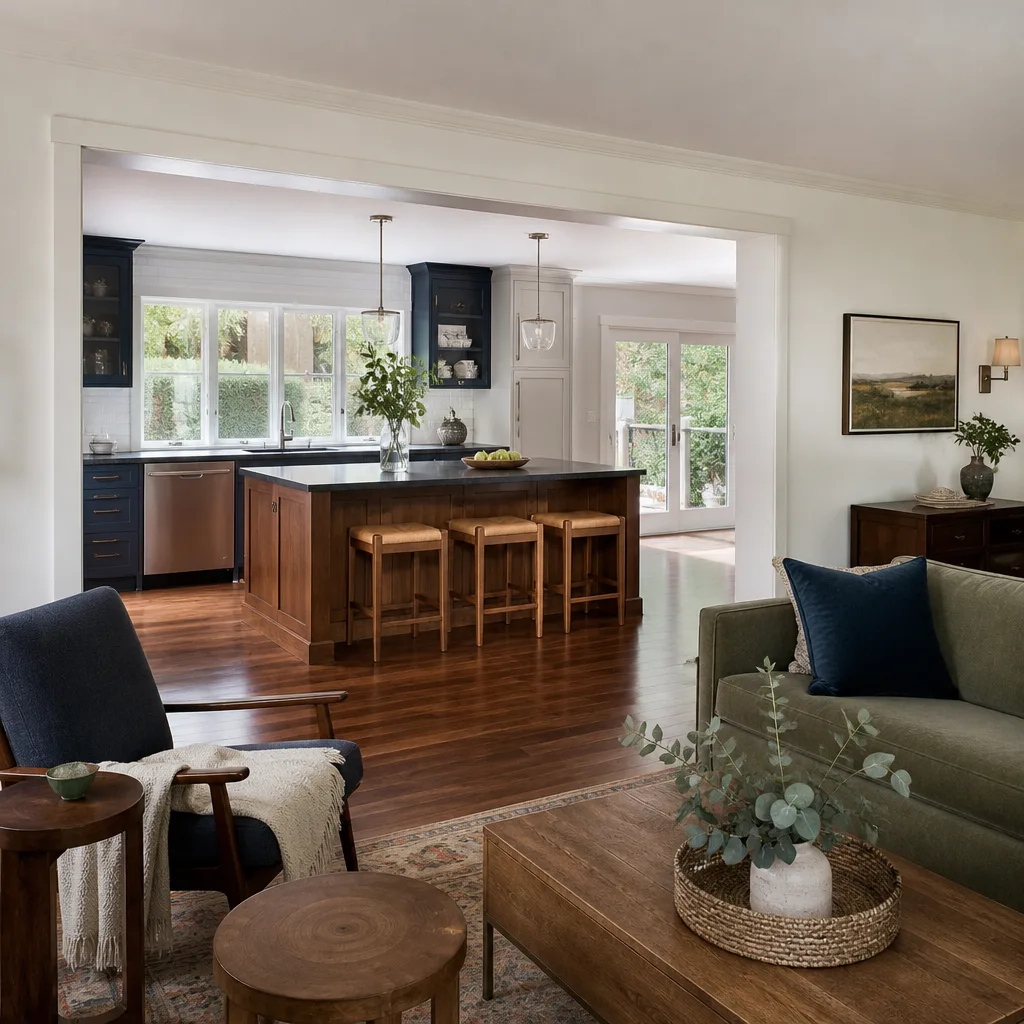
Free written scope consultation - allowances, timeline, and change-order rules on paper before a single trade is scheduled
Cambria Home Additions & ADU: The Tampa Owner’s Guide
Cambria home additions and ADU construction in Tampa typically runs $45,000 – $130,000 for a finished addition, with detached ADUs landing between $90,000 and $220,000. We install Cambria quartz countertops, backsplashes, and surface applications inside every addition we build, and we stock the Cambria-compatible substrates, adhesives, and edge profiles needed to match your existing home. Most homeowners discover their current addition or ADU plan has a failed component when a countertop seam separates, an edge chips, or the substrate under the Cambria surface swells from Tampa humidity. The failure is rarely the Cambria slab itself. It’s what’s underneath it and how it was set.
That’s the part most people miss. Cambria is a non-porous quartz surface. It doesn’t fail on its own in normal use. What fails is the installation: the wrong adhesive, the wrong seam placement, a substrate that wasn’t level, or support that flexes under weight. We see it in older Tampa homes regularly, especially in Seminole Heights, where the bungalow stock means original framing has shifted and the previous contractor didn’t account for it. Curtis Lane has spent over two decades in Florida construction and he’ll tell you the same thing he tells every homeowner we work with: the surface is only as good as what it’s set on.
Bradford Remodeling Co Tampa is an independent contractor. We are not affiliated with Cambria. We buy Cambria slabs directly from authorized distributors, and our relationship is with the homeowner, not the manufacturer.
Which Cambria Models This Applies To
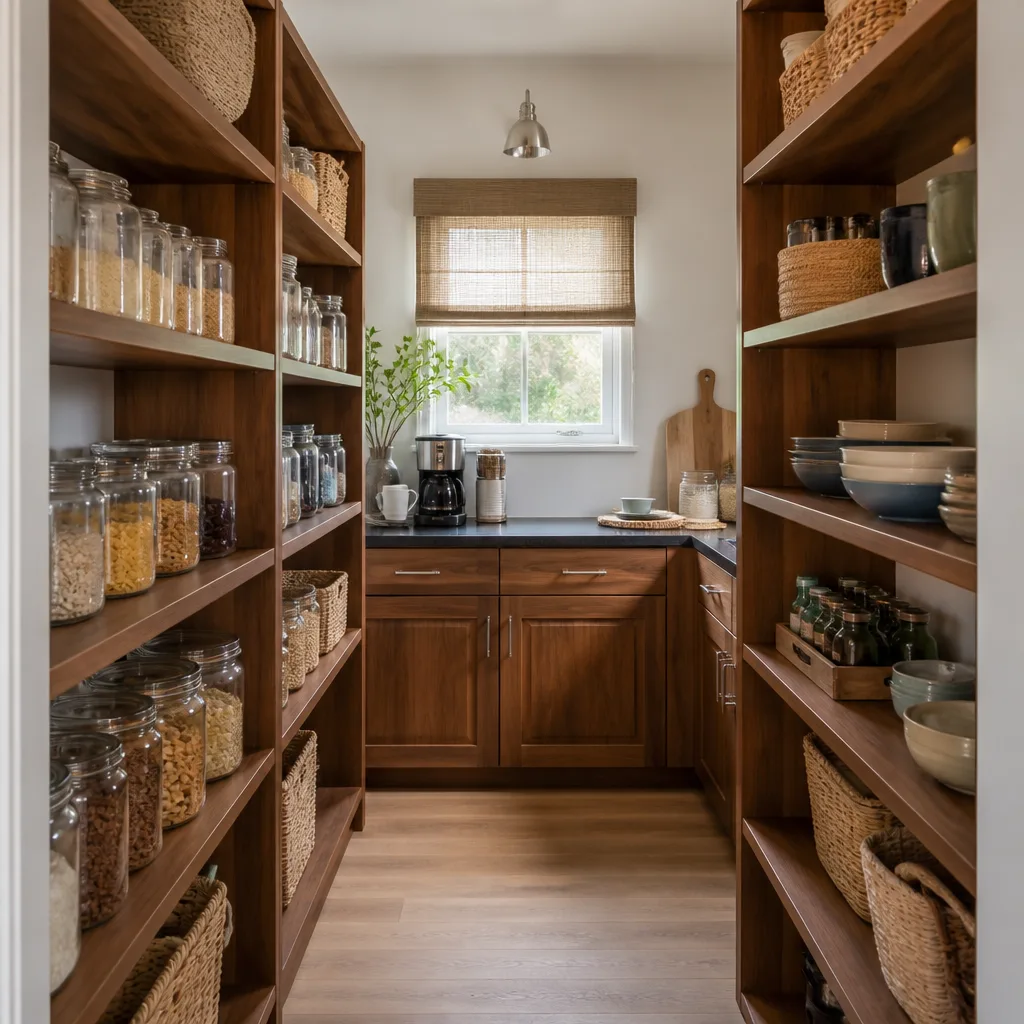
Cambria produces quartz in three thicknesses: 1 cm, 2 cm, and 3 cm. The 3 cm material is the standard for kitchen countertops and island surfaces in Tampa additions. The 1 cm and 2 cm options show up more often on vertical applications: backsplashes, shower walls, fireplace surrounds, and ADU bathroom vanities. If you’re matching an existing Cambria design to a new addition surface, you need the exact design name from Cambria’s catalog, like Brittanicca, Ella, or Torquay. Those names are printed on the slab identification sticker, which is usually still on the underside of a countertop or the back of a vanity top if the installer never removed it.
Here’s the compatibility gotcha most Tampa homeowners run into: Cambria design batches are not color-identical from year to year. A slab of Brittanicca purchased in 2019 will not be a perfect match to the same design name purchased in 2025. The base palette is close, but natural mineral variation in the quartz blend means the veining pattern and intensity shift between production runs. If you’re extending a countertop into a new addition and need a seamless color match, the right move is to purchase all needed slabs from the same lot, or design the transition so the seam is intentionally separated by a cooktop, sink, or elevation change.
OEM compatibility for Cambria means using the manufacturer-specified adhesive system, which for most Tampa installations is a two-part quartz adhesive tinted to the slab color, plus a silicone sealant at all joints where the surface meets walls, cabinets, or appliances. Aftermarket adhesives from box stores are usually polyester-based and they cure too rigid for Florida’s temperature swings, which causes seam pop in the first humid summer. We stock Cambria-recommended adhesive and sealant systems on our trucks, so when we quote an addition with Cambria surfaces, the line item includes the correct setting materials, not a generic substitute.
Styles & brands we work with







Signs Your Cambria Home Additions & ADU Is Failing
- Seam separation at the joint. The two slabs pull apart slightly, leaving a visible dark line. This means the adhesive cured too rigid or the substrate flexed. In Tampa, seasonal humidity cycling makes this worse. The fix is removing the old adhesive, cleaning both edges, and resetting with a proper quartz adhesive.
- Chipped or ragged edge near a sink or cooktop. Cambria chips at exposed edges when the overhang is unsupported or someone knocks a heavy pot against the lip. A professional can polish out small chips. Deep chips require an edge rebuild or a replacement section.
- Hairline crack running from a corner cutout. This is almost always a fabrication error or an unsupported span. Corner cutouts for sinks and cooktops concentrate stress. If the fabricator didn’t reinforce the narrow section, Florida’s temperature swings finish the job. This is not repairable. The section gets replaced.
- Dark discoloration along the seam or edge. That’s moisture wicking into a failed seam or a bottom-side adhesive bleed. In Tampa’s humidity, a poorly sealed seam drinks water. The stain is inside the joint, not on the surface. Removal, cleaning, and proper resealing is the fix.
- Countertop sitting visibly off-level. A Cambria surface installed on an unlevel substrate will show a lippage gap at seams or a slope you can feel when you set a marble down. The original installer skipped leveling. The slab may need to be lifted, the substrate corrected, and the surface reset.
See the difference
 Before
 After
After Before
 After
After Before
 After
AfterReplacement Cost & What’s Included
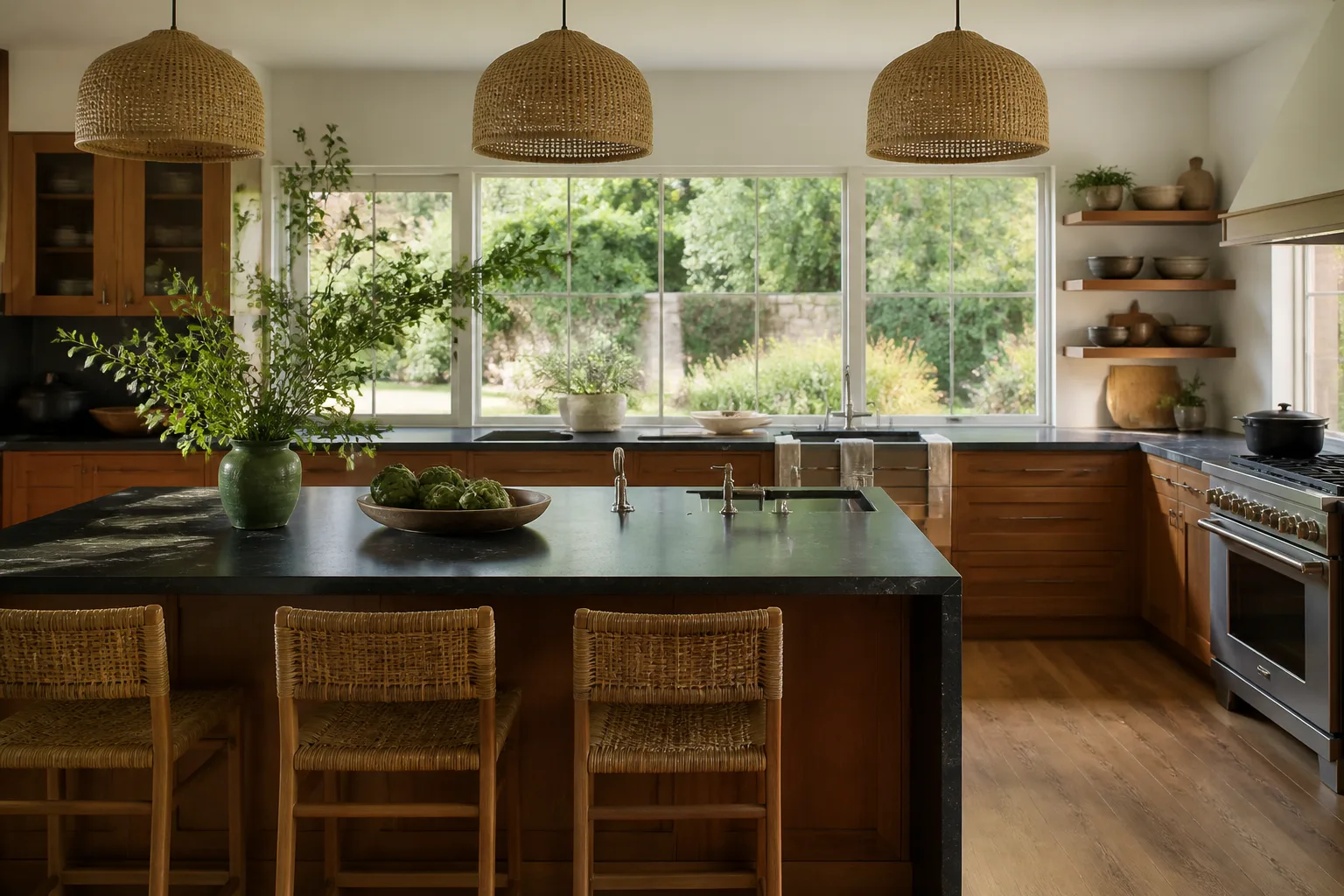
For a Cambria surface replacement inside an existing Tampa home addition or ADU, installed pricing on countertops runs $2,000 – $6,500 depending on square footage, edge profile, and design selection. A full addition build that includes Cambria surfaces as part of the finish package falls into the $45,000 – $130,000 range on this page. The line item for Cambria inside that number includes slab cost, fabrication, delivery, adhesive, sealant, and the labor to set and level it.
What drives the range in Tampa: the specific Cambria design (standard designs run lower; special-order designs with heavier veining cost more per square foot), the number of cutouts, whether you need a seam or can run a single slab, and the condition of the substrate underneath. If we’re pulling an old surface and the substrate is rotted or out of level, that correction is a separate line item, and we tell you before work starts. Every quote is written. The price you sign is the price you pay. No number moves at the door.
The work itself is covered by our 365-Day Done Right Promise. If the Cambria surface or any part of the installation fails within one year of completion, we come back and correct it at no charge. That’s in writing, on the signed contract, before the first tool comes out.
DIY or Call Us?
There are things a Tampa homeowner can safely check without touching anything. You can inspect seams for visible separation. You can run your hand along edges looking for chips. You can place a level on the surface to see if it’s drifting. Those are diagnostic, and they help you describe the problem accurately when you call.
What you should not do is attempt to cut, lift, re-adhere, or reset a Cambria slab yourself. A 3 cm quartz slab weighs roughly 18 to 20 pounds per square foot. A standard island top can exceed 400 pounds. Badly placed clamps, the wrong adhesive, or a dropped section will do real damage to your cabinets, your floor, and possibly to whoever is helping you. We’ve also been called to fix DIY seam repairs where the homeowner used a hardware-store epoxy that yellowed within six months and made the seam more visible than before. By the time we arrive, the original problem is buried under the amateur fix and the labor cost doubled. If your Cambria surface is failing, call us at (941) 655-9297 and describe what you’re seeing. We’ll tell you straight whether it needs a repair or a replacement, and what it will cost.
FAQs
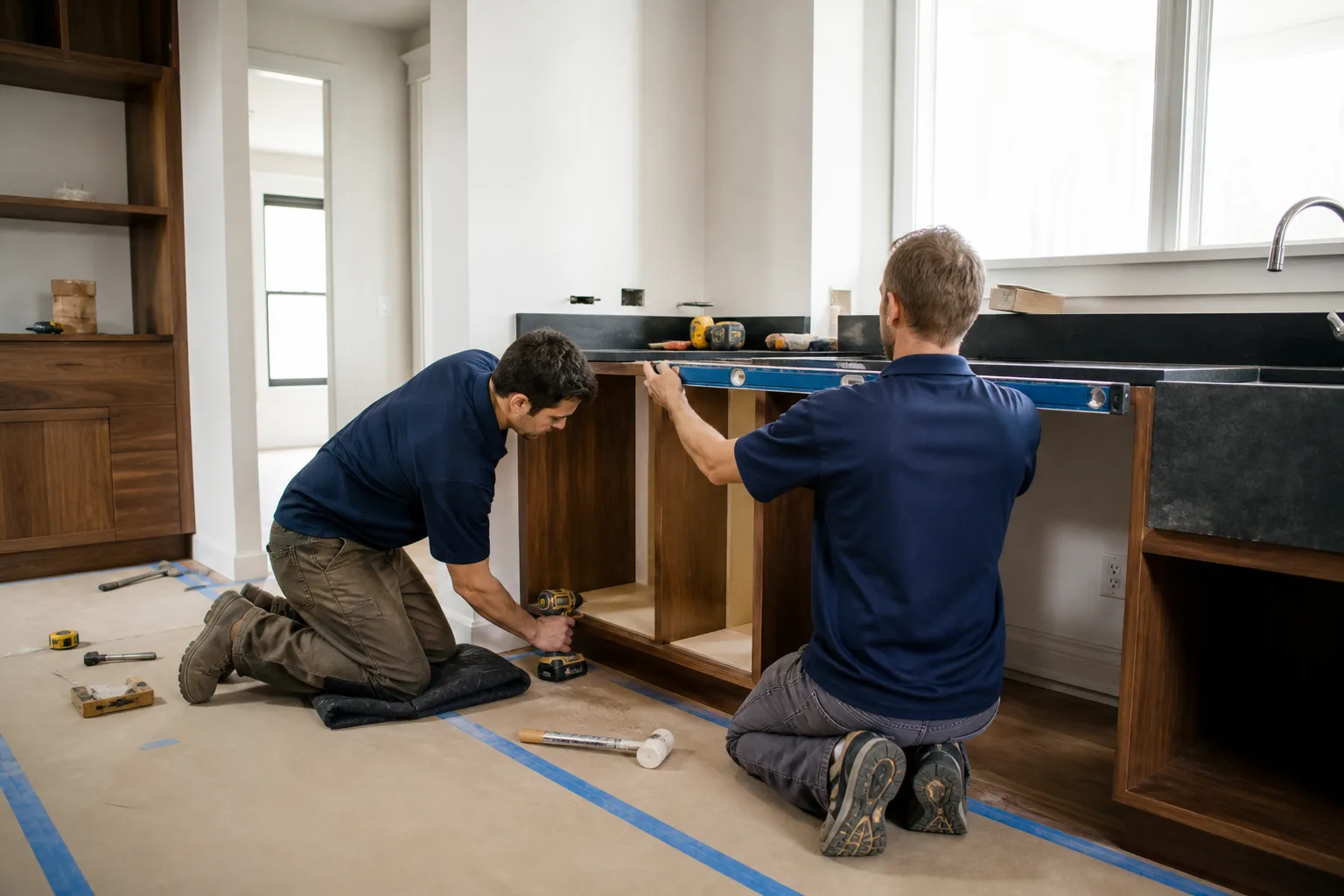
A properly installed Cambria surface should last 20+ years without significant wear, including through Tampa’s humidity and heat cycles. The surface material itself is non-porous and stain-resistant. What shortens its life is a failed seam, an unsupported span, or a substrate that was never leveled, which is why we document substrate condition before any slab goes down.
Small edge chips can be polished out by a professional. Hairline cracks running from a cutout or across the slab cannot be repaired structurally. The quartz will continue to spread. If your crack is at a sink or cooktop corner, the section gets replaced. Call (941) 655-9297 and we’ll give you a straight answer based on photos and measurements.
Most single-surface replacements in Tampa run one to two days from template to final set, depending on whether fabrication is in-house or through our distributor. A full addition or ADU with Cambria throughout extends the timeline to the full project schedule, typically several weeks to several months. We give you the timeline in writing with the quote.
Yes. Our trucks carry the two-part quartz adhesive system and silicone sealants specified for Cambria installations, plus the edge profiles and substrate materials we use on every Tampa job. We don’t substitute generic box-store products when the manufacturer spec calls for something specific. The setting materials are included as line items in your written quote.
If you need Cambria surfaces matched, repaired, or installed inside a Tampa home addition or ADU, call Bradford Remodeling Co Tampa at (941) 655-9297. We’ll schedule a free estimate, walk the site with you, and put a written number in your hand before you commit to anything. Straight number, clear scope, no surprises at close-out.
Written by Curtis Lane, Owner, Bradford Remodeling Co Tampa at Bradford Remodeling Co Tampa, serving Tampa and nearby areas.


