
Free written scope consultation - allowances, timeline, and change-order rules on paper before a single trade is scheduled
James Hardie Home Additions & ADU: The Tampa Owner’s Guide
If you’re planning a home addition or ADU in Tampa with James Hardie siding and trim, the installed cost typically runs $45,000 to $130,000 depending on square footage, foundation work, and whether you’re adding a full bath. We stock and install the full James Hardie exterior line on every addition we build, and we price the job in writing before the first tool comes out. Most homeowners reach this page because they’re either budgeting an addition, comparing Hardie to stucco or vinyl for Florida humidity, or they’ve discovered that a previous contractor installed Hardie board without proper flashing and now they’re chasing water damage.
Here’s what we see most often in Tampa: a homeowner gets an addition quoted by a contractor who doesn’t know Hardie’s clearance and flashing requirements, the job goes in wrong, and two years later the bottom edge of the siding is swelling at the corners of the new bedroom or ADU. That’s the call we get. By the time Curtis Lane walks the site, the fix is usually a tear-off at the base, new flashing, and reinstallation done to Hardie’s published specs. It’s not a cheap correction, and it’s one hundred percent avoidable if the first contractor had read the install manual.
Key Takeaways
- James Hardie additions in Tampa run $45,000 – $130,000 installed, depending on scope.
- Hardie fiber-cement requires specific clearance above grade and proper flashing in Florida’s wet climate; non-compliant installs fail within a few years.
- We stock HardiePlank lap siding, HardiePanel vertical siding, HardieTrim boards, and HardieSoffit on the truck for additions and ADUs.
- Every addition or ADU from Bradford Remodeling Co Tampa gets a written price before work starts and a one-year written guarantee when it’s done.
Which James Hardie Models This Applies To
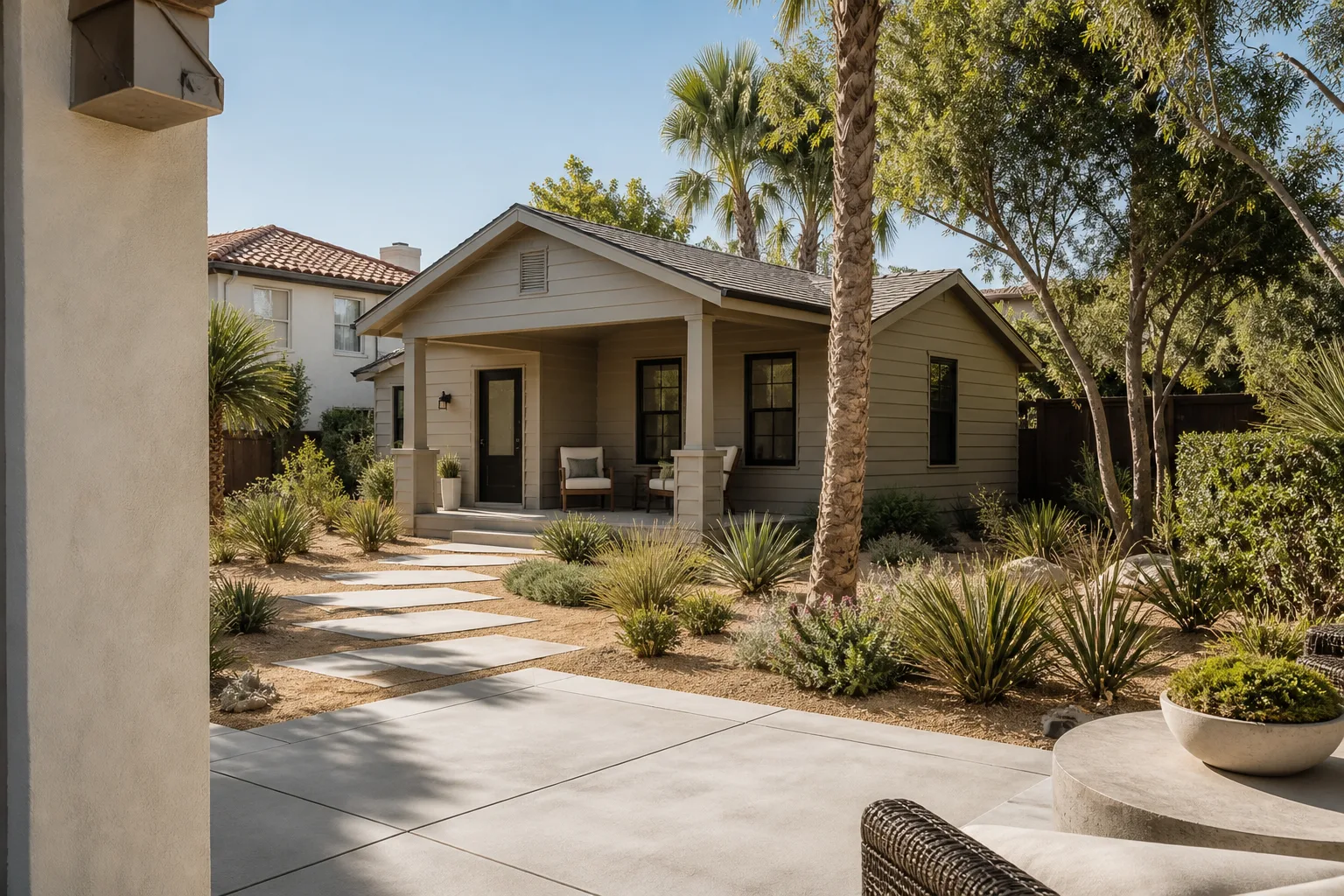
Any home addition or ADU we build can be finished in James Hardie fiber-cement products. The big three we install in Tampa are HardiePlank lap siding (the horizontal board most people picture), HardiePanel vertical siding (often used on modern ADU designs and gable ends), and HardieTrim boards (used around windows, doors, and corners). We also stock HardieSoffit for porch ceilings and eaves, which is vented or non-vented depending on your roofline.
The compatibility gotcha most Tampa homeowners don’t know: HardiePlank is manufactured in specific widths (5.25″, 6.25″, 7.25″, 8.25″) and you cannot mix a leftover 6.25″ board into a wall run of 7.25″ board without the reveal looking wrong and water wicking through the butt joints. If you have an existing Hardie exterior and you’re adding onto it, we order the exact width and color that’s already on the house. ColorPlus factory finish is the easiest to match, but if the original siding was primed and painted on site, we order primed board and paint to match after install. Aftermarket knockoff fiber-cement exists; we don’t use it. James Hardie publishes its own fastener schedule and exposure tables, and those are the numbers we build to, because they’ve been tested through decades of Florida humidity cycles that aftermarket boards haven’t.
Styles & brands we work with







Signs Your James Hardie Home Additions & ADU Is Failing
- Swelling or buckling at the bottom edge near grade. Hardie requires a minimum 6-inch clearance between the bottom of the siding and the ground in most applications, and in Tampa’s rainy season, water wicks up through soil splash. If a contractor buried the bottom course, the board absorbs moisture and swells. That’s the number one failure we correct on additions.
- Butt joints opening up between boards. Hardie’s exposure table specifies how much overlap each board gets, and butt joints must land on studs with flashing behind them. When a crew skips the joint flashing or misses a stud, the joint opens, water gets behind the siding, and you’ll see a dark line of moisture staining at the seam.
- Caulk cracking around window and door trim. HardieTrim requires gapped butt joints that move with thermal expansion, not a continuous caulk bead. In Tampa heat, improper caulking cracks within a year and lets water run down the trim and behind the flashing.
- Efflorescence or white mineral staining bleeding through paint. This is trapped moisture finding its way out through the board. It means water is behind the siding and soaking the back face. Florida’s humidity speeds this up, and it’s almost always a flashing failure that needs the siding pulled and corrected.
- Nail pops at the top of the wall. Hardie board needs to be fastened with corrosion-resistant nails driven flush to the face, not countersunk. A sunken nail head leaves a dimple that catches water. When you see rust streak below a nail head on an addition, that’s a homeowner-installed or shortcut-install tell.
See the difference
 Before
 After
After Before
 After
After Before
 After
AfterReplacement Cost & What’s Included
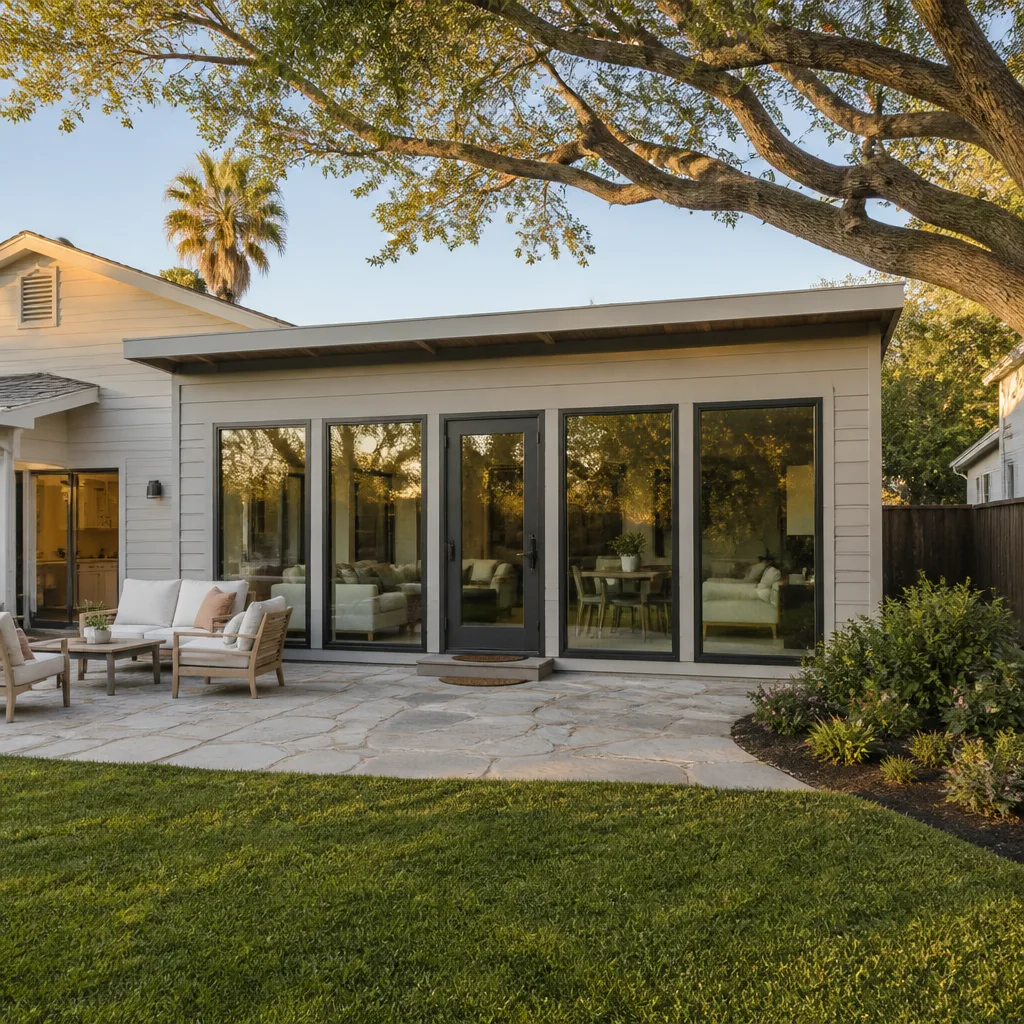
A full home addition finished in James Hardie products in Tampa runs $45,000 to $130,000, with ADU construction running higher depending on kitchen and bath rough-ins. The Hardie portion of that scope (siding, trim, soffit, and the labor to hang and flash it) typically lands between $8,000 and $22,000 on a 300-to-600-square-foot addition. The range comes down to whether you’re using primed board plus on-site paint or ColorPlus pre-finished product, whether the addition has complex gables and corner boards, and whether we’re matching existing siding or starting fresh.
Every number includes the material, labor, flashing, fasteners, and cleanup. You get a written line-item price before any work starts, and that number doesn’t move at the door. The entire addition or ADU, not just the siding, is covered by our 365-Day Done Right Promise: if anything fails within a year, we come back and correct it at no charge. That’s a written document in your hand at close-out, not a handshake.
DIY or Call Us?
Fiber-cement siding is not an electrical panel or a loaded garage spring, but it’s not a weekend project either. Cutting Hardie board produces silica dust, which requires a proper respirator and good jobsite dust control, not just a box-store mask. The boards are also heavy; a 12-foot HardiePlank lap board weighs more than most homeowners expect, and holding it on a scaffold while nailing to schedule is a two-person job. Where DIY goes wrong most often in Tampa is the flashing detail work: the head flashing above windows, the kickout flashing at roof-wall transitions, and the clearance at grade. Get those wrong and you won’t see the problem for two or three rainy seasons. By then the water damage is inside the wall.
What you can safely do: inspect your existing siding for swelling at the edges, check that caulk lines aren’t cracked, and make sure soil and mulch aren’t piled up against the bottom course. If you find issues, call (941) 655-9297 and we’ll send a crew out to assess it. Estimate’s free, and you’ll get a written number before anything is scheduled.
FAQs
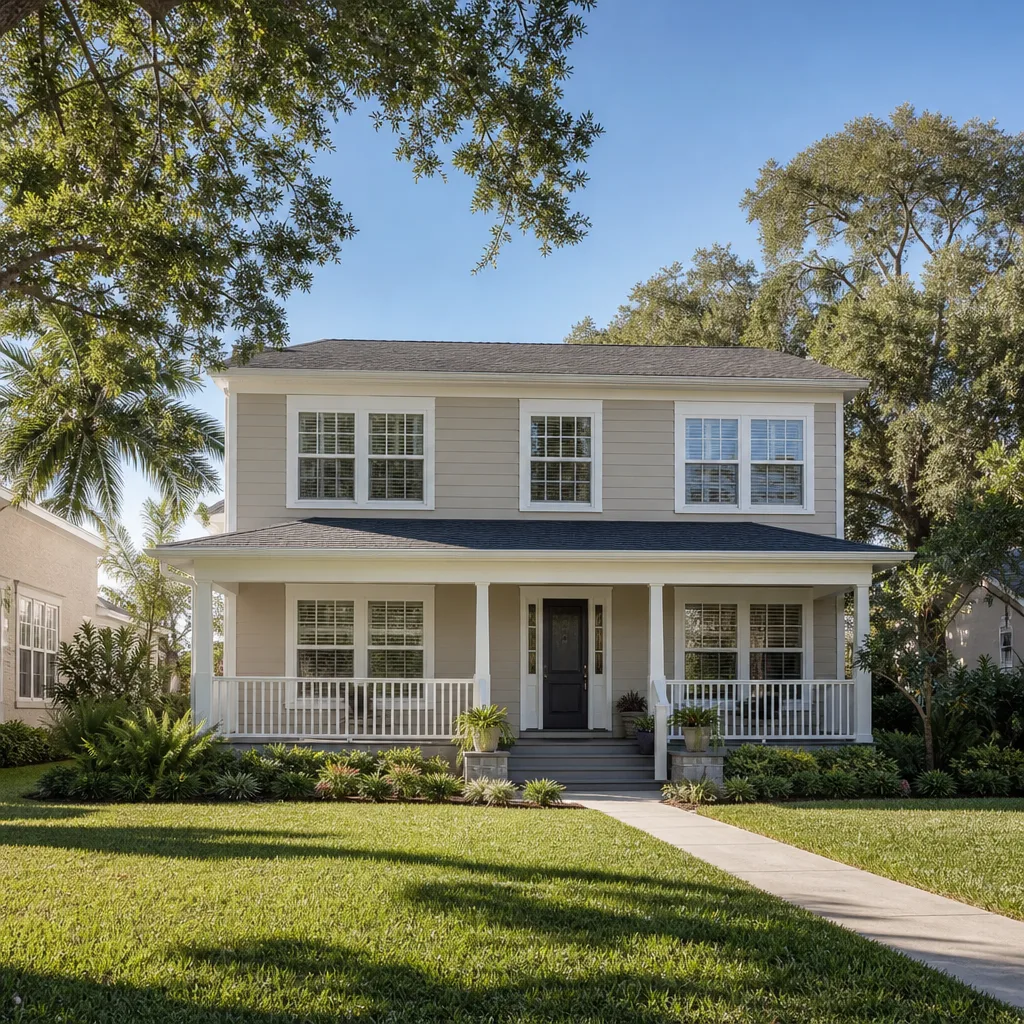
In Tampa’s humidity and rain, properly installed James Hardie siding lasts 30 to 50 years, and the product warranty covers the fiber-cement itself for 30 years. Improper installation shortens that dramatically because the failure isn’t the board, it’s the flashing and clearance work behind it. Call (941) 655-9297 if you suspect an install problem on your existing addition; we’ll give you an honest read on what’s going on.
Isolated boards can be pulled and replaced if the damage is limited to one course and the flashing behind it is still intact. Once water has been getting behind multiple courses or the trim, patching won’t stop the leak, and you’re throwing money at a wall that’s going to keep rotting underneath. We’ll tell you which situation you’re in before you spend anything, and the assessment is free.
A typical 300-to-600-square-foot addition takes 8 to 16 weeks from permit to final walk-through, depending on whether you’re adding a bath or kitchen and what the site access looks like. The Hardie siding phase itself is usually a 3-to-5-day run once framing and rough-in are done. We give you a written schedule with the written price, so you know the milestone dates before you sign.
Yes. We run trucks stocked with HardiePlank lap siding in the most common Tampa widths, HardieTrim corner boards, HardieSoffit panels, and the corrosion-resistant fasteners Hardie specifies. If your addition needs a less common width or a specific ColorPlus finish, we order it direct and it’s usually on site within a week.
If you’re planning a James Hardie home addition or ADU in Tampa, or you’ve got a siding problem on an existing one, call (941) 655-9297 for a free estimate. We’ll walk the site, put a straight number in writing, and give you a scope you can hold us to. Straight number, clear scope, no surprises at close-out.
Written by Curtis Lane, Owner, Bradford Remodeling Co Tampa at Bradford Remodeling Co Tampa, serving Tampa and nearby areas.


