
Free written scope consultation - allowances, timeline, and change-order rules on paper before a single trade is scheduled
James Hardie Kitchen Remodeling: The Tampa Owner’s Guide
If you’re remodeling a Tampa kitchen with James Hardie materials already in the home, or you’re planning to integrate James Hardie products into a new kitchen build, expect to pay between $14,000 and $45,000 for a full kitchen remodel in this market. Bradford Remodeling Co Tampa installs and works alongside James Hardie products on kitchen projects throughout the Tampa area, and we quote every job in writing before the first tool comes out.
Most homeowners land here because something didn’t hold up. Maybe the HardieBacker board behind a tile backsplash is swelling at the seams, or the HardieTrim around a pass-through window is separating from the substrate after a few Florida humidity cycles. Sometimes it’s simpler: they bought a house in Seminole Heights, the previous owner used James Hardie siding on the exterior kitchen wall, and now water is finding its way in around the range hood vent. That’s the call we get most often.
Here’s what you need to know. James Hardie makes fiber cement products: backer board, trim, siding, and panel. In a kitchen, the parts that fail first are almost always the backer board joints and the exterior transitions. Cement board doesn’t rot like drywall, but it does move. Florida heat expands it. Humidity swells it. If the installer didn’t leave the right gap or used the wrong fastener, you’ll see cracked grout lines or tile that sounds hollow when you tap it. We fix that by pulling the failed section, checking what’s behind it, and reinstalling to James Hardie’s published fastener and joint spec.
Bradford Remodeling Co Tampa is an independent remodeling contractor. We are not affiliated with James Hardie. We install their products because the material spec is public, the manufacturer backs it, and we can stand behind our own work with a written guarantee.
Which James Hardie Models This Applies To
In a kitchen remodel, the James Hardie products you’ll most likely encounter are HardieBacker 1/4″ cement board (used under tile backsplashes and some counter underlayments), HardieBacker 1/2″ cement board (used on floor substrates before tile), and HardieTrim/HardiePlank on the exterior wall if the kitchen sits on an outside wall of the house.
The compatibility gotcha most Tampa homeowners miss: HardieBacker 1/4″ is not rated for floors. It’s a wall product. If a previous contractor used 1/4″ board under a kitchen floor because it was cheaper, the tile will crack. We see this most often in older Tampa neighborhoods like Seminole Heights and Tampa Heights, where bungalow renovations from the 2010s were done on tight budgets. The 1/2″ board is the floor-rated product, and it must be set in thin-set mortar, not screwed directly to the subfloor.
For OEM versus aftermarket: James Hardie does not have a meaningful “parts” ecosystem for kitchen applications. Backer board, screws (specifically Backer-On or Rock-On screws rated for cement board), and joint tape are all purchased as stock items. The real compatibility question is whether your existing install used genuine HardieBacker or a generic cement board. The board itself will have “HardieBacker” stamped on the face in a grid pattern. If you don’t see the stamp, it’s an aftermarket board, and we treat it accordingly when matching thicknesses and fastener schedules.
Styles & brands we work with







Signs Your James Hardie Kitchen Remodeling Is Failing
- Grout lines cracking in a straight, repeatable pattern. This is almost always movement in the backer board behind the tile, not a grout problem. The board’s fasteners are pulling or the seams were not taped with alkali-resistant mesh tape. Fixing the grout without addressing the board means you’ll fix it again next year.
- Hollow-sounding tile when you tap it. The mortar bed has delaminated from the cement board. In a Tampa kitchen with wide humidity swings, this usually means the board was installed without the required thin-set layer behind it, or the mortar skimmed over before the tile went down.
- Water staining at the base of an exterior kitchen wall. HardiePlank or HardieTrim on the outside wall is meant to shed water, but if the flashing wasn’t installed where the kitchen vent or range hood exits, water runs down the inside face of the siding. The first sign is usually a soft spot in the drywall behind the base cabinet.
- Backer board edges visible through paint or crumbling at exposed seams. This happens when untaped joints were left open. Cement board edges are brittle. Every seam in a kitchen backsplash application must be taped and mudded before tile goes on. Exposed edges wick moisture from cooking steam and start to crumble.
- Floor tile cracked along a line that follows the board seam underneath. The board joints were not staggered, or the wrong board thickness was used. We see this in kitchens where a DIY or cut-rate installer used wall board on the floor to save material cost. The floor deflects, and the crack follows the seam exactly.
See the difference
 Before
 After
After Before
 After
After Before
 After
AfterReplacement Cost & What’s Included
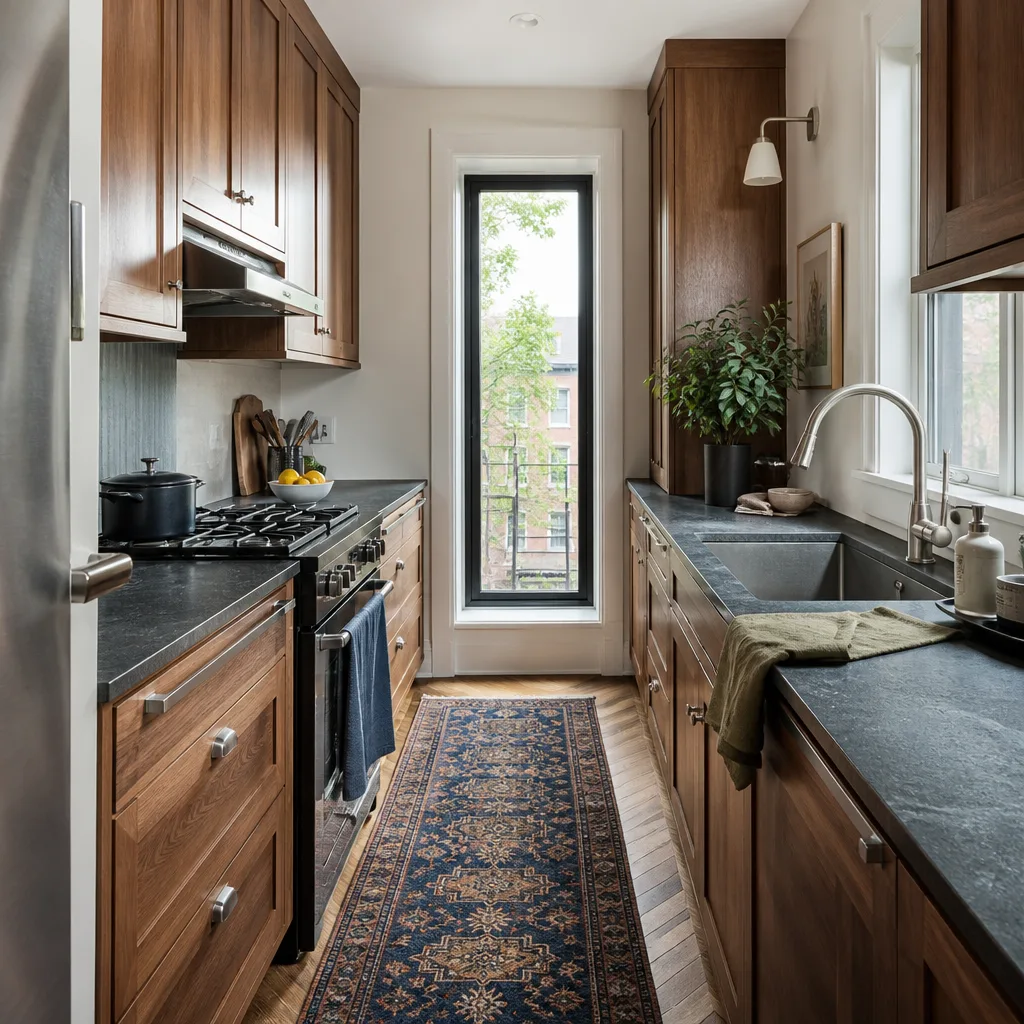
In Tampa, a full kitchen remodel runs $14,000 to $45,000 depending on scope. A James Hardie-specific repair, like replacing a failed section of backer board behind a backsplash or re-flashing an exterior transition, is usually scoped as part of a larger remodel or as a standalone repair in the $800 to $2,500 range for backsplash work.
What drives the spread on full remodels: cabinet count and brand, countertop material, whether plumbing or electrical rough-in moves, and how much remediation the existing substrate needs. Here’s the breakdown on the most common Tampa kitchen remodel line items:
- Small kitchen remodel (compact Tampa galley or condo kitchen): $9,000 – $20,000
- Cabinet installation (KraftMaid or Wellborn stock or semi-custom): $4,000 – $13,000
- Countertop installation (Cambria, Silestone, Caesarstone, or natural stone): $2,000 – $6,500
- Backsplash installation (including proper HardieBacker substrate): $800 – $2,500
- Kitchen island installation: $3,000 – $10,000
Every quote from Bradford Remodeling Co Tampa is a written, line-item price before work starts. No numbers that move at the door. No change orders that appear out of nowhere after demo. Curtis Lane prices a job once and the number stays where it was set. And every completed project carries the 365-Day Done Right Promise: if anything fails inside a year, we come back and correct it at no charge.
DIY or Call Us?
There are things an owner can reasonably check without opening up a wall. Tap the tile and listen for hollow spots. Look for grout cracks that repeat in a pattern. Check the caulk line where the countertop meets the backsplash on an exterior wall. If you see staining below the range hood vent from the outside, take a picture from the exterior side of the wall and note where the water is entering.
But actually pulling failed tile, demoing backer board, and reinstalling to James Hardie’s fastener schedule? That’s not a weekend project. Cement board is heavy, the dust is silica-based (you need a respirator, not a paper mask), and if the substrate is moving, the new tile will fail the same way the old tile did. What a homeowner sees as a cracked tile is usually a structural or moisture problem behind it. If you open up a Tampa kitchen wall and find mold from a failed exterior transition, you now have a remediation job on top of a tile job.
Call (941) 655-9297 and we’ll send someone out to look at it. The estimate’s free, and you’ll get the straight answer on what’s actually going on behind the tile.
FAQs
When installed to spec, HardieBacker lasts the life of the kitchen; the failures we see in Tampa are almost always installation failures, not material failures. Cement board itself doesn’t rot or break down, but Florida’s humidity cycles will expose every shortcut within five to seven years. If the seams were taped and the fasteners were placed on the printed grid, the board will outlast the tile on top of it. Call (941) 655-9297 if you suspect a shortcut on your install and want it checked.
Yes, in most cases we can section-repair the failed area if the remaining tile is still solid and the substrate around it is sound. The real question is whether we can match the tile; if you don’t have spare tile from the original install, you may be better off replacing the full backsplash rather than patching in a near-match that will always look like a patch. We’ll tell you straight which way makes more sense for your budget before you commit.
A backsplash substrate repair is a two-to-three-day job including dry time for the mortar and grout. A full kitchen remodel with James Hardie substrate, new cabinetry, counters, and backsplash typically runs 4 to 8 weeks depending on scope and whether plumbing or electrical moves. Every Bradford Remodeling Co Tampa job gets a written schedule alongside the written price, so you’ll know what’s happening week to week.
We keep HardieBacker in both 1/4″ and 1/2″ thicknesses, alkali-resistant mesh tape, and cement-board-rated screws on hand; HardieTrim, HardiePlank, or specialty product is ordered per job from local Tampa supply houses. We also work with KraftMaid, Wellborn, Cambria, and Silestone for the other components of a kitchen remodel, so specifications are traceable from the substrate up.
Straight number, clear scope, no surprises at close-out. Call (941) 655-9297 and we’ll walk your Tampa kitchen, figure out what failed and why, and put the whole fix in writing before you spend a dollar.
Written by Curtis Lane, Owner, Bradford Remodeling Co Tampa at Bradford Remodeling Co Tampa, serving Tampa and nearby areas.


