
Free written scope consultation - allowances, timeline, and change-order rules on paper before a single trade is scheduled
Sakrete Home Additions & ADU: The Tampa Owner’s Guide
If you’re planning a home addition or ADU in Tampa using Sakrete concrete products, you’re looking at an installed project cost of $45,000 to $130,000 for the full addition, with ADU construction running $90,000 to $220,000 depending on square footage, site prep, and finish level. Most Tampa homeowners discover their Sakrete-based slab or stem wall has a problem when hairline cracks start showing through the floor covering, or when doors in the new addition begin sticking a year after close-out. The good news: a properly specified Sakrete mix, placed and cured by a crew that understands Florida’s soil conditions, will hold for decades. The catch: most failures we see aren’t the Sakrete product itself. They’re what’s underneath or around it.
Bradford Remodeling Co Tampa is an independent contractor, not affiliated with Sakrete. We specify and install Sakrete products because they’re consistent, but the brand on the bag doesn’t matter if the substrate is wrong. That’s the part most people don’t see until it’s too late.
Which Sakrete Products Apply to Home Additions & ADUs
Not every Sakrete bag is right for structural work, and that’s where Tampa homeowners get into trouble. For a home addition or ADU foundation, stem wall, or slab, you’re typically working with Sakrete’s 5000 Plus or High Strength Concrete Mix, which carries the PSI rating needed for load-bearing pours in Florida. For footers, a standard 4000 PSI mix does the job, but if you’re building in a flood zone or near Tampa Bay’s brackish groundwater, you need a mix with sulfate resistance. That’s a compatibility gotcha most people miss: standard Sakrete mix and Florida’s coastal soil chemistry don’t always agree, especially south of Gandy Boulevard where the water table sits high and the soil runs more aggressive.
How to identify what’s already on your slab: check the bag remnants if you still have them, or look at the mix design on file from the original pour. If neither exists, we core-sample the slab and test compressive strength. That’s the only honest way to know whether an existing Sakrete pour can carry a second-story addition or an ADU built on top of it. Too many Tampa owners assume the existing slab is fine. In Seminole Heights, where Curtis Lane and our crew have worked on older bungalows, we’ve cored slabs that looked fine from above and found voids underneath where the original mix was placed too dry and never bonded. You can’t see that from the surface.
For non-structural work like walkways, patio slabs, or shed pads inside an ADU build, Sakrete’s standard concrete mix works fine. For the structural envelope, get the PSI rating in writing before a single bag is opened.
Styles & brands we work with







Signs Your Sakrete-Based Foundation, Slab, or Stem Wall Is Failing
- Hairline cracks that widen over a season. Small shrinkage cracks are normal. Cracks that open more than 1/8 inch and keep moving point to soil settlement or a pour that cured too fast in Tampa’s heat. The fix depends on whether the slab is still monolithic or has separated.
- Doors and windows in the addition stick or bind. This means the framing or the slab has shifted. In an ADU, this shows up in the bathroom door or the closet door first because those openings are smallest. The cause is usually differential settlement, not the Sakrete mix itself.
- Moisture wicking up through the slab. Tampa’s high water table means vapor drive is constant. If you see dark patches on the concrete or flooring adhesive failing, the slab lacked a proper vapor barrier underneath, not that the Sakrete product was defective. Still, it’s a failure in the assembly.
- Crumbling or spalling at slab edges. This is water intrusion plus poor curing. Tampa’s afternoon thunderstorms soak exposed edges. Once spalling starts, the edge keeps degrading. It’s repairable with a polymer-modified Sakrete resurfacer, but you have to address the drainage first or it comes back.
- Visible efflorescence, a white chalky film, on stem walls. This tells you water is moving through the concrete. In a stem wall crawlspace or under an ADU, that means the waterproofing or drainage plane failed somewhere. The Sakrete product is doing what concrete does; the problem is the system around it.
See the difference
 Before
 After
After Before
 After
After Before
 After
AfterReplacement Cost & What’s Included
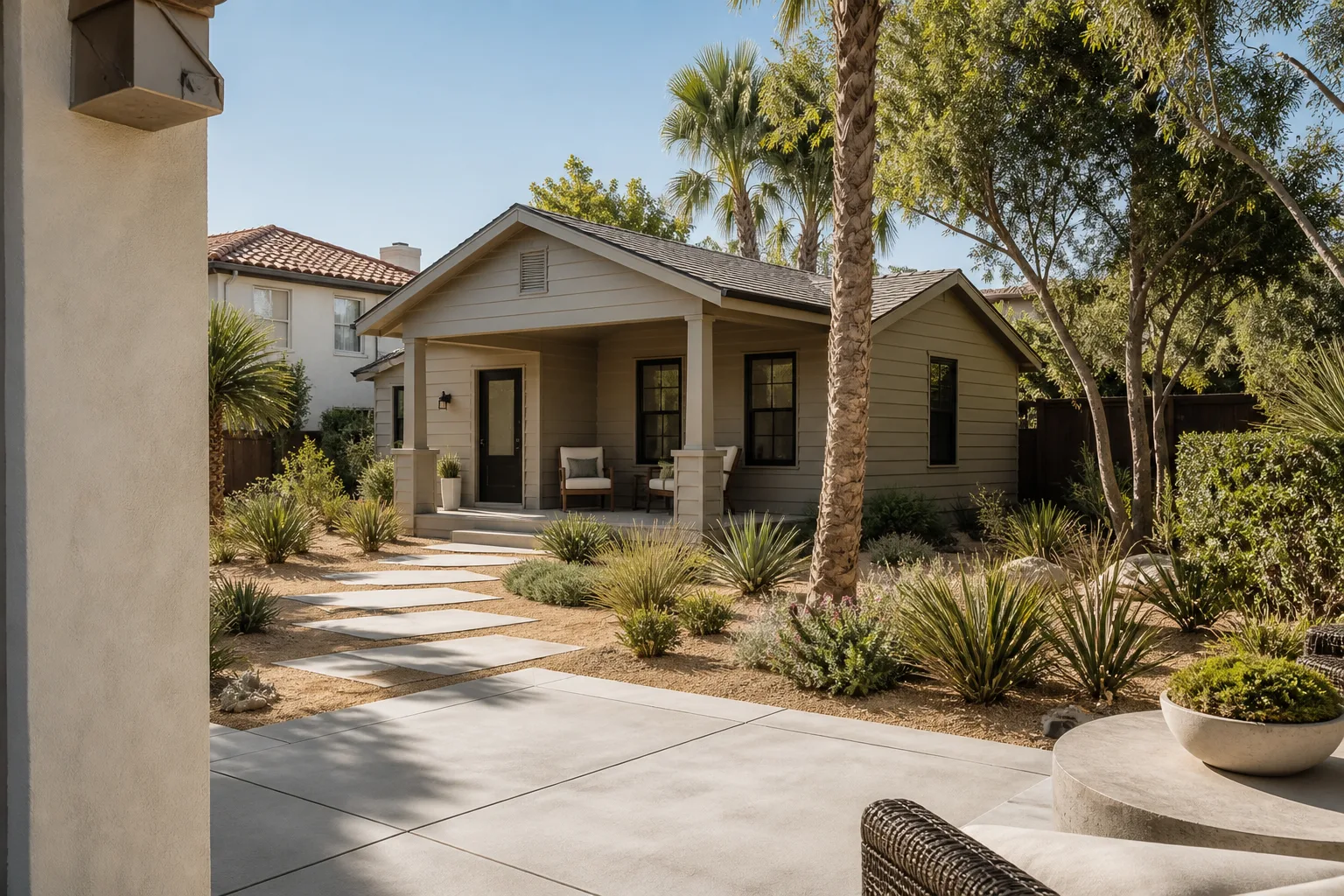
For a full home addition or ADU in Tampa, the price range is not a mystery number. A home addition runs $45,000 to $130,000. An ADU runs $90,000 to $220,000. These figures include everything: plans, permitting, site prep, the Sakrete concrete foundation or slab, framing, mechanical rough-in, drywall, finishes, and close-out. What moves the number within that range? Square footage is the big driver, followed by whether the lot requires additional piers or soil correction, and how far the finish level goes. A basic ADU office shell is far less than a full one-bedroom with a kitchenette and bath.
Bradford Remodeling Co Tampa writes the price down before any work begins. You get a line-item scope. The number doesn’t change at the door. If concealed conditions force a change, we document it in writing and you approve it before we proceed. That’s The Garrison Standard, and it applies to every Sakrete-based addition or ADU we build. The work is covered by the 365-Day Done Right Promise: if something fails within the first year, we come back and fix it at no charge. You get a signed written guarantee at close-out.
What a Squared-Away Job Looks Like
At job close, you should have a clean site, a documented scope that matches the work performed, and a signed written guarantee in your hand. No leftover debris piles. No vague punch list that never gets resolved. Curtis Lane’s rule is this: if it’s not in the written scope, it’s not being charged. If it’s in the written scope, it gets done. A straight number, clear scope, no surprises at close-out. That’s how every Bradford job ends, whether it’s a $45,000 bedroom addition in Seminole Heights or a $220,000 ADU in Westchase.
DIY or Call Us?
There’s a real split here. If you’re inspecting an existing Sakrete slab for cracks or spalling, you can do that yourself. Take photos, mark crack widths with a pencil and date, and watch them over a few weeks. That’s useful information. If you’re thinking about pouring a structural slab or stem wall yourself to save money on an addition or ADU, don’t. Concrete placement for load-bearing work in Tampa involves rebar schedules, vapor barriers, proper curing in 90-degree heat, and code inspections at specific pour points. Get any of those wrong and you’re not saving money, you’re buying a tear-out later. That demolition costs more than the original pour, and no Sakrete bag rescues a bad substrate.
What you can check safely: drainage around the slab, visible cracking, and whether gutters are discharging water away from the addition. Those are homeowner-level observations. Everything else, call us at (941) 655-9297. We’ll walk the site, look at what’s there, and give you a written assessment with a straight number.
FAQs
A properly placed Sakrete structural slab or stem wall in Tampa lasts 50 years or more before any major repair is needed, assuming it was installed with the correct mix design, rebar schedule, vapor barrier, and curing. The failure we see most often isn’t the concrete wearing out; it’s the assembly around it, drainage, vapor protection, or soil movement, falling short. Call (941) 655-9297 if you want an honest assessment of what you have.
Yes, in most cases a cracked slab can be repaired with epoxy injection or polymer-modified Sakrete resurfacing products, but only if the underlying cause, usually soil settlement or drainage, is fixed first. If the slab has lost structural continuity or the crack runs through a load-bearing point, replacement of that section is the honest fix. We’ll tell you which one applies to your slab.
A standard ADU or home addition in Tampa takes 4 to 9 months from permit to close-out, depending on square footage, site conditions, and finish level. The concrete phase, footers, slab or stem walls, and curing, runs 2 to 4 weeks of that timeline. Tampa’s permitting office adds time, and we include that in the written schedule before the contract is signed.
We run Sakrete structural mixes and resurfacing products on our trucks for repair scopes, and we specify Sakrete for full foundation and slab pours on additions and ADUs. Whether it’s on the truck depends on the job; a full ADU foundation gets a scheduled bulk delivery at the correct mix design, not bagged mix from the truck bed. Either way, the spec is in writing.
Written by Curtis Lane, Owner, Bradford Remodeling Co Tampa at Bradford Remodeling Co Tampa, serving Tampa and nearby areas.


