
Free written scope consultation - allowances, timeline, and change-order rules on paper before a single trade is scheduled
Cambridge Pavers Home Additions & ADU: The Tampa Owner’s Guide
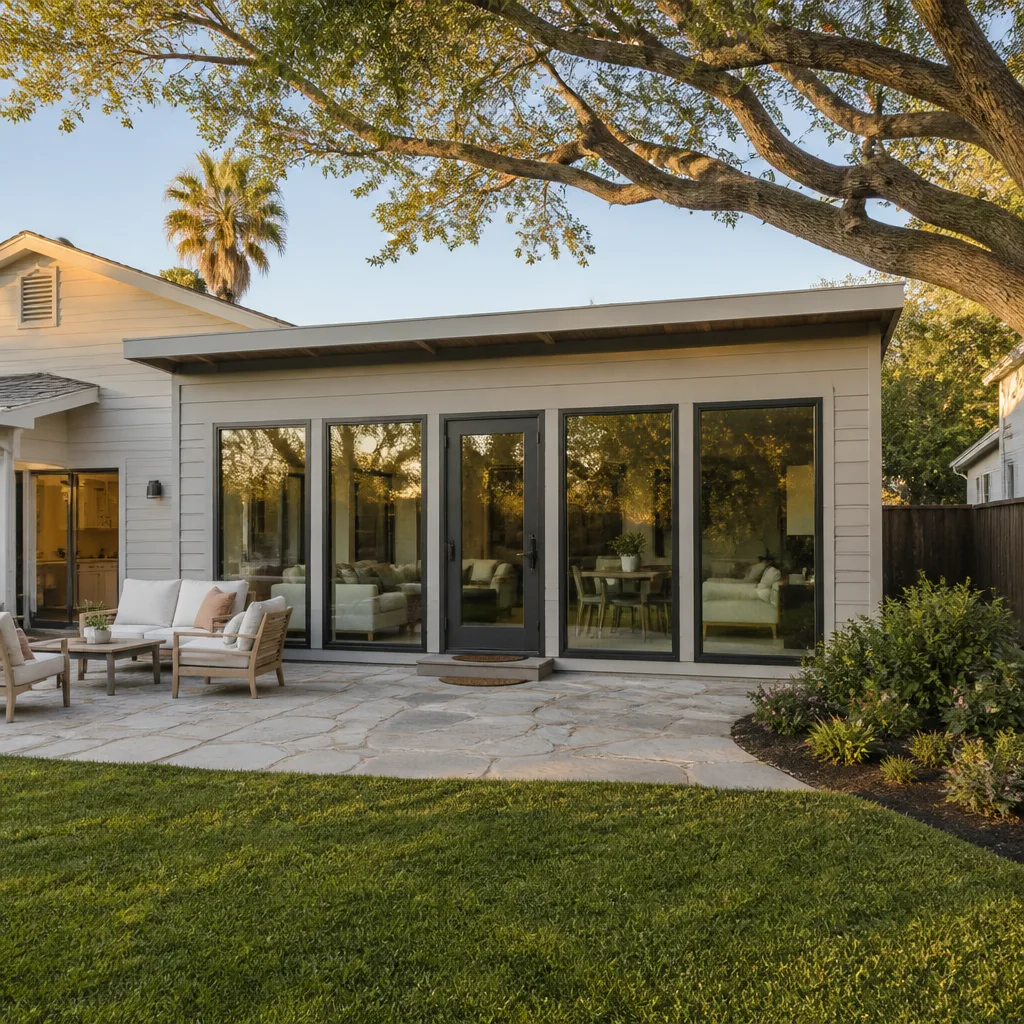
A Cambridge Pavers home addition or ADU in Tampa typically runs $45,000 to $130,000, with accessory dwelling units starting around $90,000 and running to $220,000 depending on foundation work, utility runs, and finish level. We stock and install Cambridge Pavers-compatible hardscape components for these projects, from pavers and wall block to edge restraint and base materials. Most homeowners don’t discover a problem until they notice a trip hazard at a paver seam, water pooling against the addition’s foundation wall, or a section of walkway that has settled away from the new structure.
The symptom picture usually starts small. A corner of the paver walk to your new in-law suite sits a half inch low after the first heavy rain. Water runs toward the slab instead of away from it. Within a season in Tampa’s wet-dry cycles, that half inch becomes an inch and a half, and the edge restraint starts pulling loose. That’s the moment to address the substrate, not just reset a few pavers.
Which Cambridge Pavers Models This Applies To
Cambridge Pavers runs several product lines that show up regularly in Tampa additions and ADU projects: the Maytrx and RoundTable collection for walkways and patios, the Ledgestone and Stonewall lines for veneer and retaining walls, and the Pavingstone series most often used for driveways and courtyard approaches. The compatibility detail that matters most: Cambridge wall block and paver heights are matched within a series, but not across series. A Ledgestone cap does not sit cleanly on a Stonewall course. We’ve seen that mismatch on projects where a previous contractor used leftover material from two different pallets and called it close enough.
To identify what you have, check the underside of any loose paver or block. Cambridge stamps a batch code there. The code won’t identify the product name directly, but paired with the unit’s face dimensions and thickness, it gets us to the right match. For OEM versus aftermarket: Cambridge’s own color blending across pallets is the tightest in the industry, and when we’re extending an existing Cambridge surface, we order OEM from the same color lot whenever possible. Aftermarket equivalents exist for base materials and edge restraint, and we use them where spec allows. The paver itself, if it’s visible, should stay OEM or the color drift will bother you every time the sun hits it.
Styles & brands we work with







Signs Your Cambridge Pavers Home Additions & ADU Is Failing
- Settlement dip at the walkway-to-slab transition. The base wasn’t compacted to spec before the pavers went down. In Tampa’s sandy soil, under-compaction shows up within one rainy season. Water runs toward the foundation instead of away, which is a slow-motion problem for the addition itself.
- Edge restraint curling up or separating from the paver field. This is usually a missing or undersized edge spike. The restraint did its job right up until a few years of Tampa sun and rain cycled the substrate, then it let go. Once one edge is loose, the whole perimeter starts walking.
- Pavers rocking underfoot near the ADU entrance. Point load from foot traffic has found a void underneath. The void was always there; the traffic just exposed it. Rocking pavers crack faster than settled ones, because each step flexes the unit until it snaps.
- Wall block on the addition leaning or bulging at the midpoint. No geogrid, or geogrid installed at the wrong course. Retaining walls under three feet can sometimes get away without reinforcement, but Cambridge’s taller wall specs call for it every time. A bulge at the middle is the wall telling you the grid is absent.
- Efflorescence that returns after cleaning. White powdery residue on pavers isn’t dangerous by itself, but persistent efflorescence after a proper cleaning means moisture is moving through the paver bed and evaporating at the surface. That moisture path, left unaddressed, is the same thing that will eventually move your base material around.
Replacement Cost & What’s Included
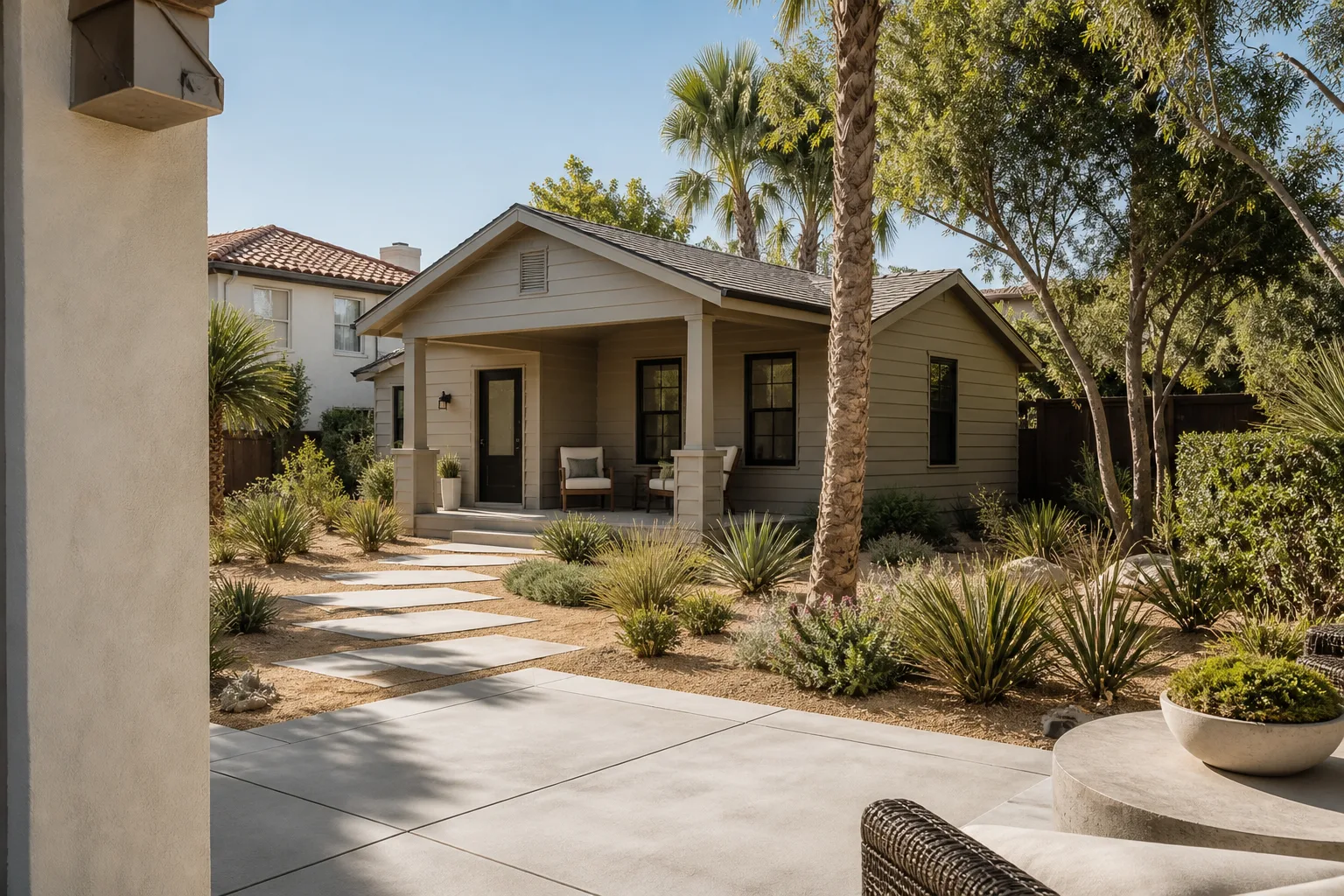
For Cambridge Pavers work tied to a home addition or ADU in Tampa, an installed repair or paver extension runs $3,500 to $11,000 when we’re working the hardscape side. A full addition with paver walkways, a courtyard, or an attached patio lands between $45,000 and $130,000 on the structure, with the paver scope priced as a line item inside that total. ADU construction runs $90,000 to $220,000 by the time foundation, framing, utilities, and hardscape are accounted for.
Every line item is written. The paver quote includes excavation of the failed base, new compacted base material to depth spec, geotextile where the soil calls for it, OEM or spec-approved Cambridge Pavers units, edge restraint with spikes at Cambridge’s recommended spacing, and polymeric sand in the joints. You get a written price before the shovel goes in the ground, and the total doesn’t change at the door. The work carries the 365-Day Done Right Promise: if the paver field fails within a year of completion, we return and correct it at no charge.
See the difference
 Before
 After
After Before
 After
After Before
 After
AfterDIY or Call Us?
What an owner can safely do: identify the symptom, photograph it from a few angles, and check whether the affected area is isolated or part of a larger pattern. A loose cap on a short wall is information. A six-foot section of walkway settling toward your ADU foundation is a different conversation.
What goes wrong with DIY on a Cambridge Pavers addition repair is the base work. Most homeowners will reset the pavers on top of the same failed substrate and be back in the same spot after the next heavy rain, a few hundred dollars lighter. The base, not the paver, is the repair. And if you’re dealing with a structural wall block issue or anything touching the addition’s foundation, you want a contractor who has redone this wrong once or twice and learned from it. We have. Call (941) 655-9297 and we’ll come look at it.
FAQs
A properly installed Cambridge Pavers surface in Tampa should hold its structural integrity for 25 to 30 years, though the base may need re-leveling within that window. Florida’s wet-dry cycles and sandy substrate are the long-term enemy, not the paver itself. Call (941) 655-9297 for an exact assessment of your site.
Sections can usually be lifted, the base re-compacted, and the same pavers reset when the units themselves aren’t cracked. If the base failed but the pavers are intact, restoration costs less than full replacement. If the pavers have shifted enough to chip edges and corners, the math changes. Call (941) 655-9297 and we’ll tell you which path applies to your project.
A typical Cambridge Pavers walkway or patio repair around a Tampa addition runs two to four days, including base removal, re-compaction, paver reset, and joint sand. Larger ADU hardscape scopes extend from there, and we’ll put the timeline in writing with the quote so you’ll know before work starts.
We keep Cambridge base materials, edge restraint, spikes, and joint sand stocked for common Tampa projects, and we order OEM pavers and wall block by the color lot for each specific job. That’s the difference between a color match you can see and one you can only rationalize. Call (941) 655-9297 for availability on your product line.
Get a Straight Number on Your Cambridge Pavers Addition in Tampa
If you’re in Tampa and your Cambridge Pavers home addition or ADU hardscape is settling, cracking, or pulling away, don’t guess at the fix. We’ll look at the base, identify what failed, and give you a written price before any work starts. Curtis Lane and the crew have done this enough times in Florida soil to know what holds and what doesn’t. Straight number, clear scope, no surprises at close-out.
Call (941) 655-9297 to schedule your free estimate.
Written by Curtis Lane, Owner, Bradford Remodeling Co Tampa at Bradford Remodeling Co Tampa, serving Tampa and nearby areas.


